Understanding the Basics of Handheld Oscilloscopes
Handheld oscilloscopes have gained popularity in recent years among professionals and hobbyists alike, thanks to their portability and growing functionality. These versatile tools allow users to visualize electrical signals across various applications, ranging from educational purposes to complex troubleshooting in electronics. As technology continues to advance, it becomes crucial for users, especially beginners, to understand how these devices work, what to look for when selecting one, and how they can be effectively utilized. A good starting point involves exploring options for a beginner-friendly oscilloscope, which can simplify the learning curve significantly.
What is a Beginner-Friendly Oscilloscope?
A beginner-friendly oscilloscope is typically designed with features that cater specifically to those who are new to electronics. These models often come with intuitive interfaces, simplified controls, and built-in tutorials that help users make sense of complex data. With functionalities supporting basic signal analysis, they enable users to focus less on the technical nuances of the device and more on understanding the electrical signals they are measuring.
Key Features to Look For
- Bandwidth: This defines the range of frequencies the oscilloscope can accurately measure. For most general applications, a bandwidth of at least 50 MHz is recommended.
- Portability: Look for lightweight, battery-operated models that are easy to transport, making them ideal for fieldwork.
- User Interface: A clear display with intuitive navigation will ease the learning curve and enhance usability.
- Multiple Channels: Having at least two channels allows users to compare and analyze different signals simultaneously.
- Data Storage and Export: Models that offer the ability to save and export data prove advantageous for further analysis or reporting.
Common Uses in Electronics Testing
Handheld oscilloscopes can be employed in a variety of scenarios, including:
- Measuring signal integrity in communication systems.
- Debugging electronic circuits during the development phase.
- Performing maintenance and repair on electronic devices.
- Conducting educational demonstrations in academic settings.
Choosing the Right Model for Your Needs
With several options available on the market, selecting the right handheld oscilloscope can be a daunting task. It is essential to match the features of the device with your specific needs and applications. Factors like the type of electronics you work with, your level of experience, and budget constraints will significantly influence your choice.
Top Beginner-Friendly Oscilloscopes in 2026
Some of the standout models for beginners include:
- HANMATEK® HO102S: A versatile 3-in-1 device that offers 100 MHz bandwidth and multiple functionalities for detailed analysis.
- HANMATEK® HO52: This 2-in-1 model combines a handheld oscilloscope and multimeter, making it perfect for those who need multiple tools in one compact design.
- HANMATEK® HO11: Known for its precision testing capabilities, it is an excellent choice for professionals and hobbyists alike.
Price vs. Performance Considerations
When selecting a handheld oscilloscope, price and performance are always in conflict. A lower-priced model may lack certain advanced features that you might need later, while higher-end models might be overkill for basic tasks. It’s critical to find a balance based on your requirements.
Brand Comparisons: Hanmatek vs Competitors
Hanmatek has established itself as a credible brand in the handheld oscilloscope market with products designed for reliability and ease of use. Comparing these with competitors like Rigol and Hantek demonstrates that Hanmatek devices often provide exceptional performance at competitive price points, especially for beginner models.
Getting Started: Setup and First Measurements
Once you’ve selected your handheld oscilloscope, getting it set up and performing your initial measurements is the next significant step. This phase may seem overwhelming initially, but with some guidance, you’ll be ready quickly.
Essential Setup Steps for Beginners
1. Unboxing and Charging: Start by thoroughly unboxing your oscilloscope and, if necessary, charging the device according to the manufacturer’s instructions.
2. Connecting Probes: Attach the probes to the oscilloscope inputs, ensuring secure connections to avoid measurement errors.
3. Calibration: Before taking measurements, calibrate your oscilloscope to ensure accurate readings.
Understanding Controls and Display Features
Familiarize yourself with the controls, including the vertical and horizontal scales, trigger settings, and measurement modes. Most handheld oscilloscopes will feature a user-friendly display that provides vital information at a glance.
Performing Your First Measurement
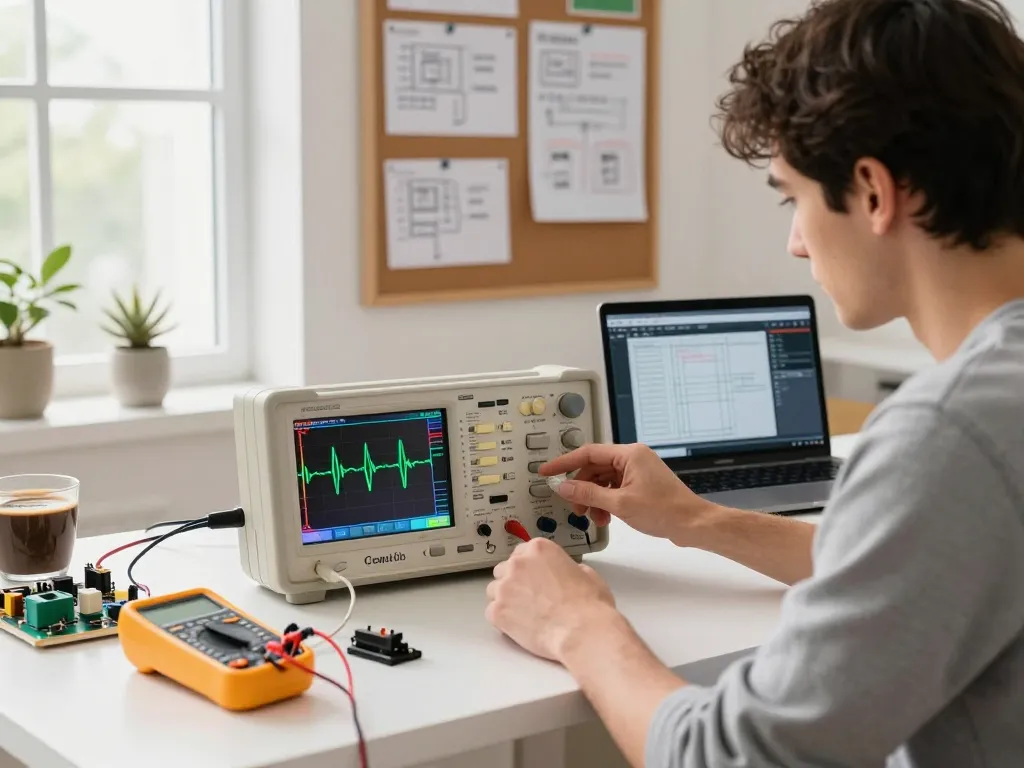
To perform your first measurement, connect the probe to a simple circuit such as a battery and resistor. Observe the waveform on the oscilloscope display and adjust settings as required to focus on the signal you want to analyze.
Common Challenges and Troubleshooting Tips
As you begin your journey with your handheld oscilloscope, you may encounter various challenges. Knowing how to address these can ease the learning process.
Overcoming Initial User Confusion
It’s natural for beginners to feel overwhelmed by the array of features available. Taking time to read the user manual and practicing with simpler tasks can clarify functionalities and enhance confidence.
Understanding Signal Visualization Issues
If the signal appears distorted or noisy, check your probe connections and ensure the oscilloscope settings (like time base and trigger level) are appropriately adjusted. Calibration can also rectify visualization problems.
Battery Life and Portability Concerns
Battery life can be a concern for handheld models. Always check the manufacturer’s specifications and consider carrying a portable charger if you plan to use the device for extended periods in the field.
Future Trends in Oscilloscope Technology
As technology evolves rapidly, so do the features and capabilities of handheld oscilloscopes. Here are several trends to watch in 2026:
Emerging Features to Watch in 2026
New oscilloscope models are increasingly incorporating features such as enhanced signal processing, higher sampling rates, and the ability to analyze complex signals with ease, catering to both novice and expert users alike.
Integration with Software and IoT Devices
With the rise of IoT, more oscilloscopes are designed to integrate seamlessly with software applications, allowing users to analyze data more effectively and share results in real-time.
How AI is Transforming Oscilloscope Functionality
Artificial Intelligence is playing a crucial role in enhancing oscilloscope capabilities. From intelligent auto-configuration to advanced waveform analysis, AI integration is making these devices even more accessible and user-friendly.
Frequently Asked Questions
What is a good entry level oscilloscope?
A good entry-level oscilloscope is one that balances features, usability, and cost. Models like the HANMATEK range are ideal for beginners, providing essential functionalities without overwhelming complexity.
How do you use a beginner oscilloscope?
Using a beginner oscilloscope involves connecting it to a circuit, selecting appropriate settings, and making necessary adjustments to visualize the waveform clearly.
What features should I prioritize in a beginner oscilloscope?
For beginners, prioritize intuitive controls, adequate bandwidth, and portability. These features will ensure you can learn effectively without getting bogged down by technical difficulties.
Are handheld oscilloscopes durable for field use?
Yes, many handheld oscilloscopes, including models from Hanmatek, are designed to be durable and withstand the rigors of field use, with protective casings and robust components.
What common mistakes do beginners make with oscilloscopes?
Beginners often make mistakes such as improper probe connections, incorrect settings, or failing to calibrate their devices before use. Understanding these pitfalls can help you progress more efficiently.